

MACMA
Role: ui/ux & branding
Context
Madrid is one of the European capitals with the most vibrant street art scene. With over 120 monthly street art–related activities, around 15 dedicated festivals, and a highly active community on social media (more than 147,000 Instagram posts under #madridstreetart and #streetartmadrid), its cultural relevance is undeniable. Despite this richness, a large portion of works remain undocumented: it is estimated that nearly 1,000 pieces are uncatalogued. The ephemeral nature of street art (constantly exposed to weather, municipal intervention, or vandalism) highlights the need to create a shared memory.
The Challenge
To design and develop an app with an intuitive interface that allows users to map, document, and discover Madrid’s street art. The platform had to respond to two core needs:
1. Exploration: providing citizens and tourists with an easy way to discover works, artists, and routes.
2. Collaboration: enabling users to contribute as curators, expanding and validating information in an open and dynamic wiki-like environment.
The design challenge was to balance usability, collaboration, and respect for the artistic diversity of urban art.
Research
The project was informed by a dual approach:
1. Ecosystem exploration: benchmarking popular apps (Google Maps, Wikipedia), digital museums (MoMA, MNCARS), and collaborative models (Wikis).
2. Qualitative interviews: conversations with artists, enthusiasts, and urban explorers revealed key findings:
• Street art is seen as an “open-air museum” that beautifies the city and creates community.
• There is strong motivation to document its ephemeral nature as a form of collective memory.
• Many users are passive observers on social media, yet recognize the value of contributing to a project like this.
• Users value personalization (creating their own routes, planning walks, audio guides, thematic filters).
• Collaboration requires trust and recognition, inspired by models like Wikipedia.
Value Proposition
MACMA (Mapa del Arte Callejero de Madrid) helps artists and enthusiasts document, locate, and preserve the memory of Madrid’s urban art. It is an open, collaborative, and accessible project that turns the city into a living, participatory museum.
Design Strategy
The design was guided by four principles:
1. Standardization: familiar, easy-to-use interfaces that reduce the learning curve.
2. Collaboration: simple, transparent hierarchies and dynamics inspired by wikis.
3. Art-oriented: information structured with the conventions of museums and cultural media.
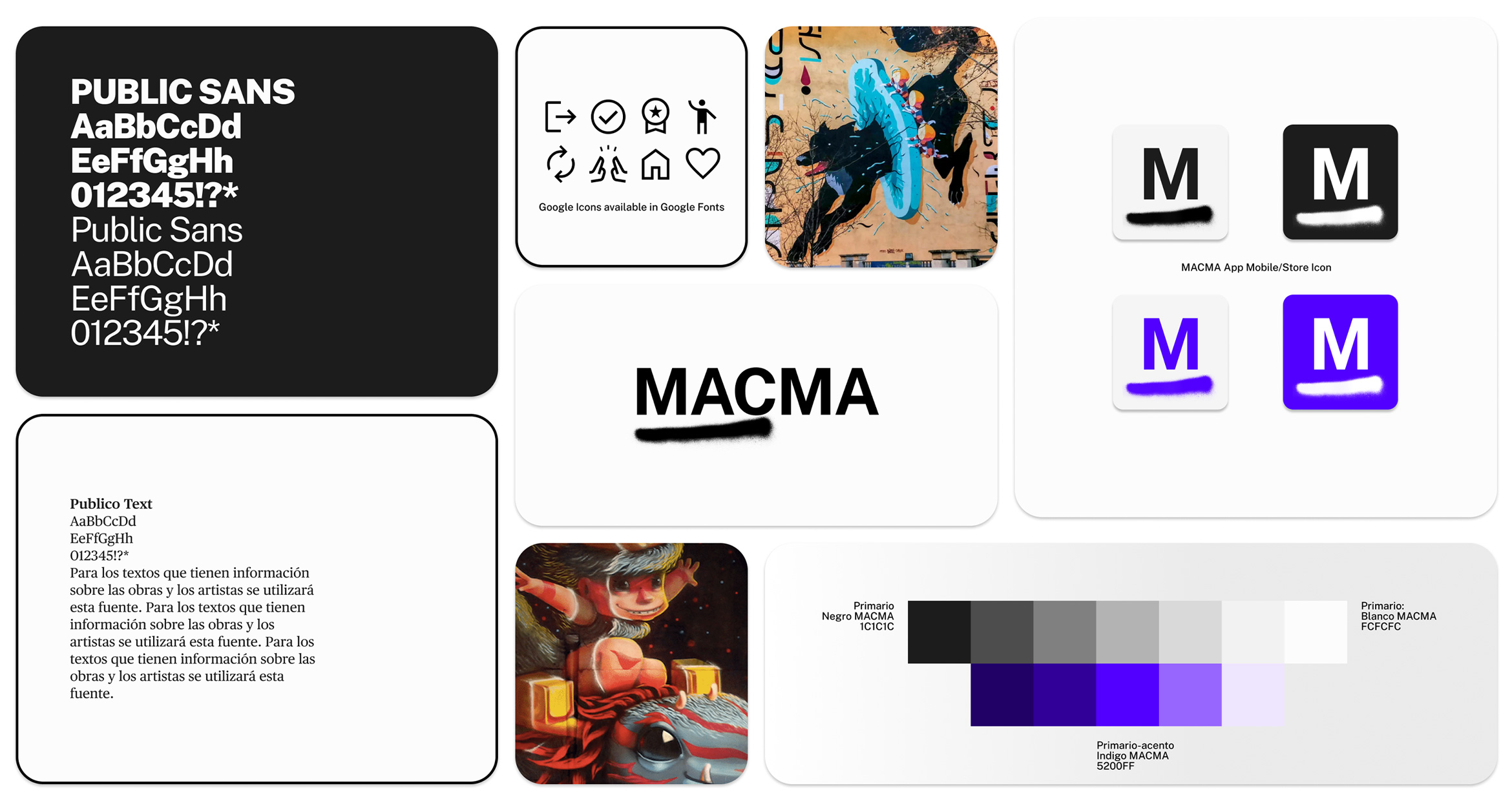
4. Visual neutrality: a clean design that respects the diverse aesthetics of street art while retaining its own identity.
User Types
Explorers: discover works, create routes, save favorites, share info — but cannot edit or upload content.
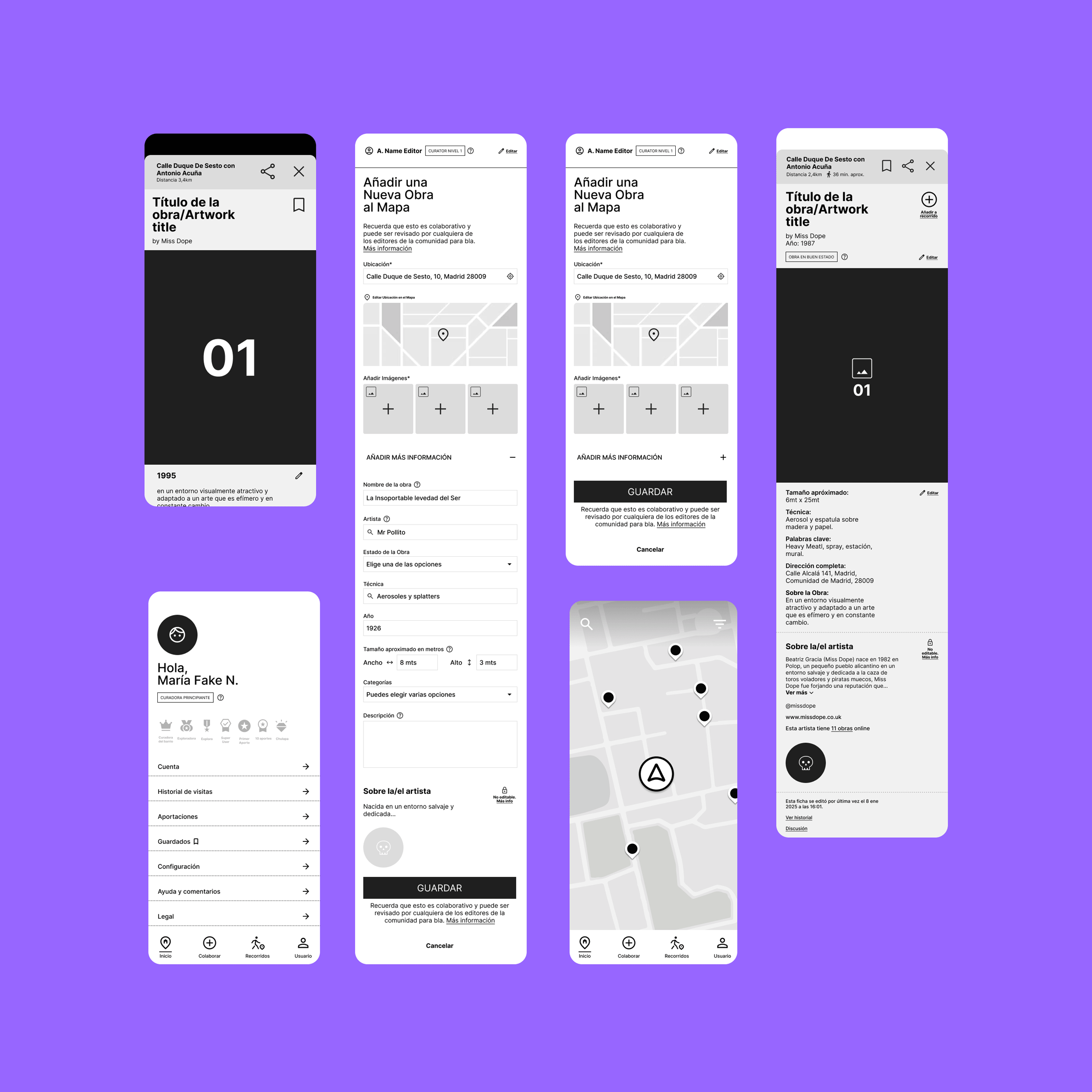
Curators: at multiple levels, they can upload works, complete entries, and validate information. They earn badges and track records of their contributions.
Artists: register and describe their works, control their biography, and validate sensitive information. Their profile requires verification.
Admins: moderate users and content, validate critical contributions, and manage technical/legal aspects without unjustified intervention.
Key Features MVP
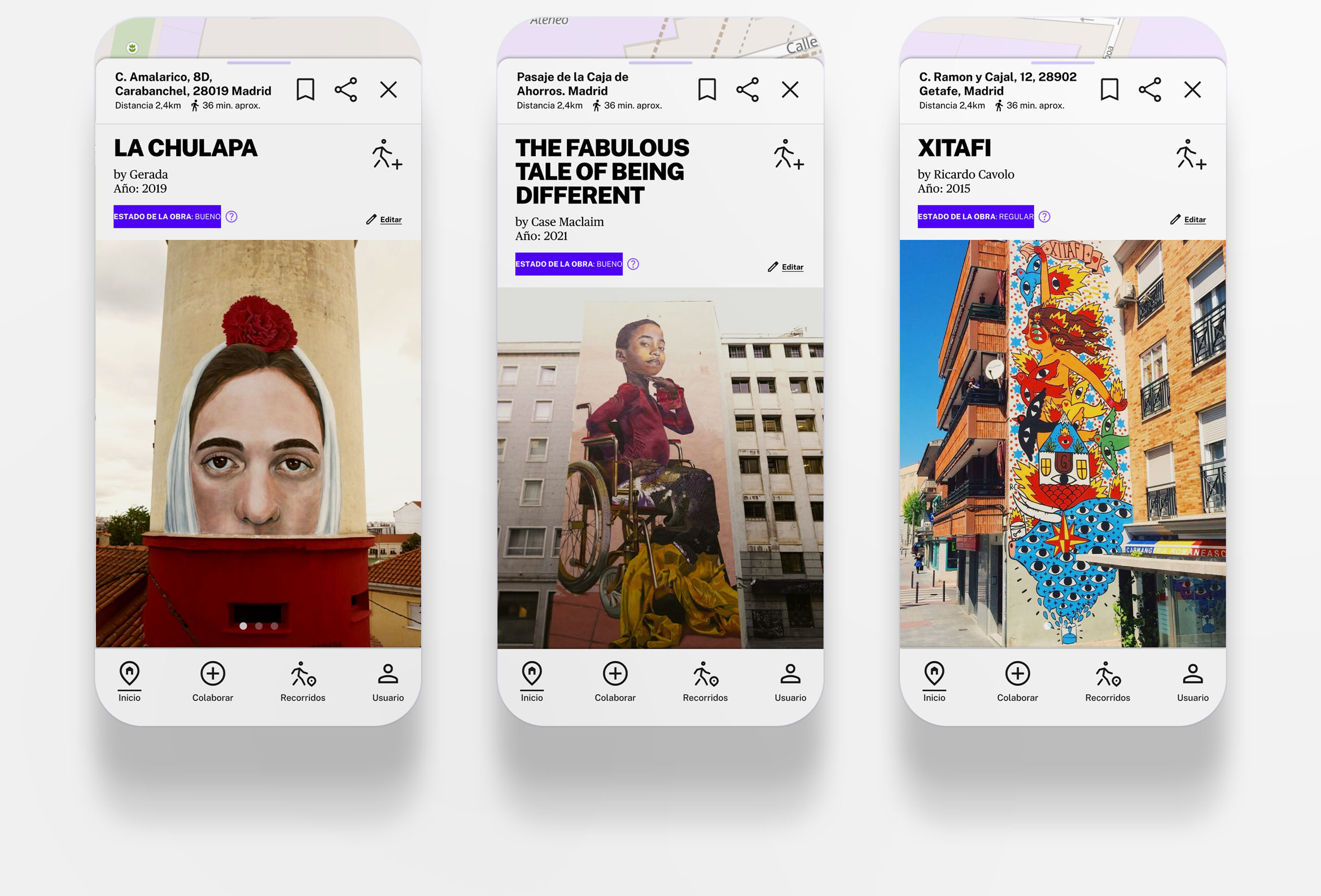
• Interactive map with geolocated works.
• Wiki-style entries: author, context, date, status.
• Collaborative uploads validated by the curator community.
• Nearby exploration mode: suggests works close to the user.
• Thematic filters: by technique, style, message, or collective.
• Personalized routes and neighborhood-based tours.
• Gamification: levels, badges, and recognition for contributors.
• Artist profiles: with bio, related works, and external links.
Identity
The project adopted the name MACMA (Mapa del Arte Callejero de Madrid), a short and memorable acronym that provides a clear identity while keeping the concept simple and accessible.
Conclusion
MACMA is more than an app, it is a cultural proposal: a space where the city itself becomes a living, ever-changing open-air museum. With a clear interface and a collaborative structure, the project seeks to preserve the memory of ephemeral art, strengthen community, and offer new ways of experiencing Madrid.